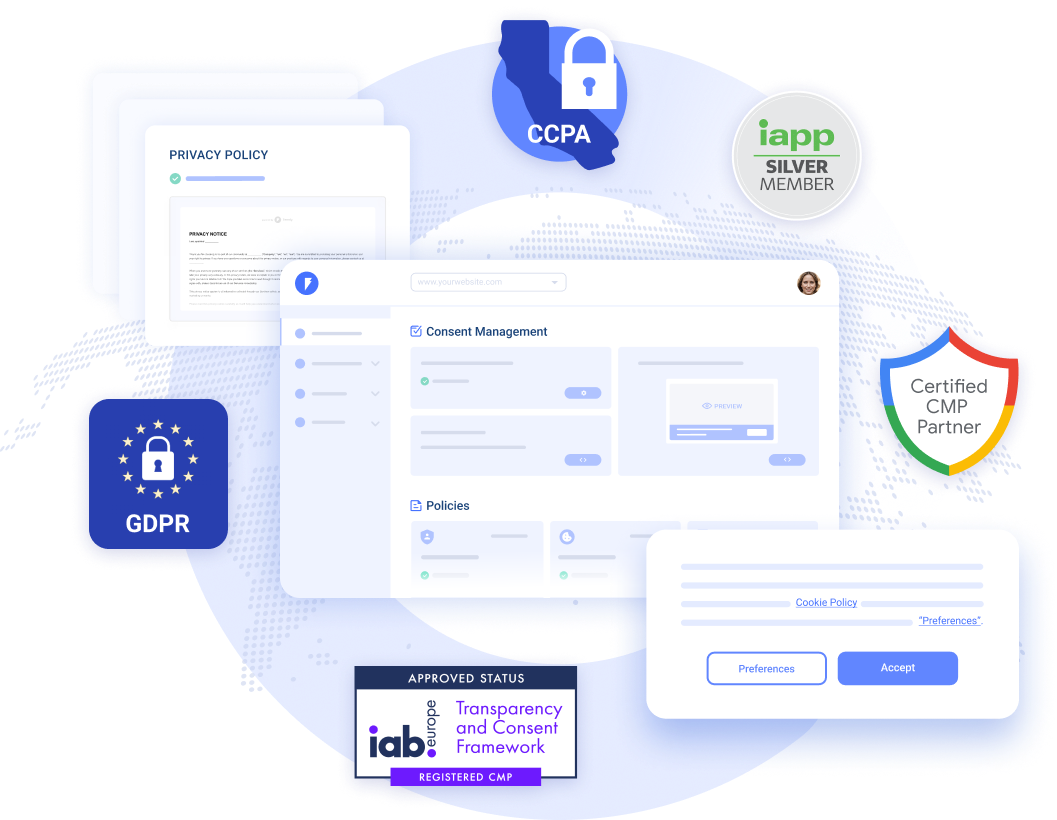
Website compliance tools can reduce repetitive work around policies and consent, but the right choice depends on where you operate and what data your site processes.
Where Termly fits
Termly combines policy-generation workflows with cookie consent and scanning, making it a useful all-in-one candidate for small businesses and website owners.
What to compare
- Privacy and terms policy workflows
- Cookie scanning and consent controls
- Geographic and regulatory coverage
- Ease of website integration
- Update and maintenance workflow
- Current plan limits and pricing
Important limitation
Software can help organize common compliance tasks, but it is not individualized legal advice. Businesses with unusual or regulated processing should seek qualified professional guidance.
Bottom line
For many small websites, an integrated tool such as Termly can be more practical than maintaining separate templates and consent systems. Choose based on your actual jurisdictions and data practices.
Website compliance tool checklist
| Capability | What to verify | | --- | --- | | Privacy-policy tools | Whether generated documents match the services and data practices of your site. | | Cookie consent | Whether consent behavior can be configured for the regions you serve. | | Scanning | How the service identifies cookies or trackers and how often scans run. | | Consent records | Whether your business needs logs or records and how they are retained. | | Integrations | Compatibility with your CMS, analytics and advertising stack. |
Where Termly fits
Termly combines policy-generation and consent-management functionality. The convenience of automation does not remove the site owner’s responsibility to provide accurate information and configure the service correctly. Read our Termly review for the product-specific assessment.
Important limitation
Compliance software can help with workflows, documents and consent interfaces, but it is not a substitute for legal advice. Requirements differ by jurisdiction and business model. If your compliance situation is complex or high risk, consult an appropriately qualified professional.
FAQ
Does installing a cookie banner automatically make a website compliant?
No. A banner is only one part of a broader privacy and data-handling process. Configuration, actual trackers, policies and regional requirements all matter.
Should a small website use a compliance tool?
It can reduce manual work, but first understand what personal data, cookies and third-party services the website actually uses.